

My dining table growing up was basically a rotating art supply shelf. Someone was always leaving a sketchpad open, and I was always sneaking in one more little doodle before dinner. These days, when I sit down to color, I still get that same cozy question: do I want the smooth, swishy thrill of markers, or the slow-and-steady comfort of colored pencils?
If you have ever stared at a fresh coloring page and felt stuck choosing a medium, you are not alone. Alcohol markers, water-based markers, and wax or oil-based colored pencils each have their own personality. This guide will help you pick the tool that matches how you actually like to color, not how you think you are supposed to color.
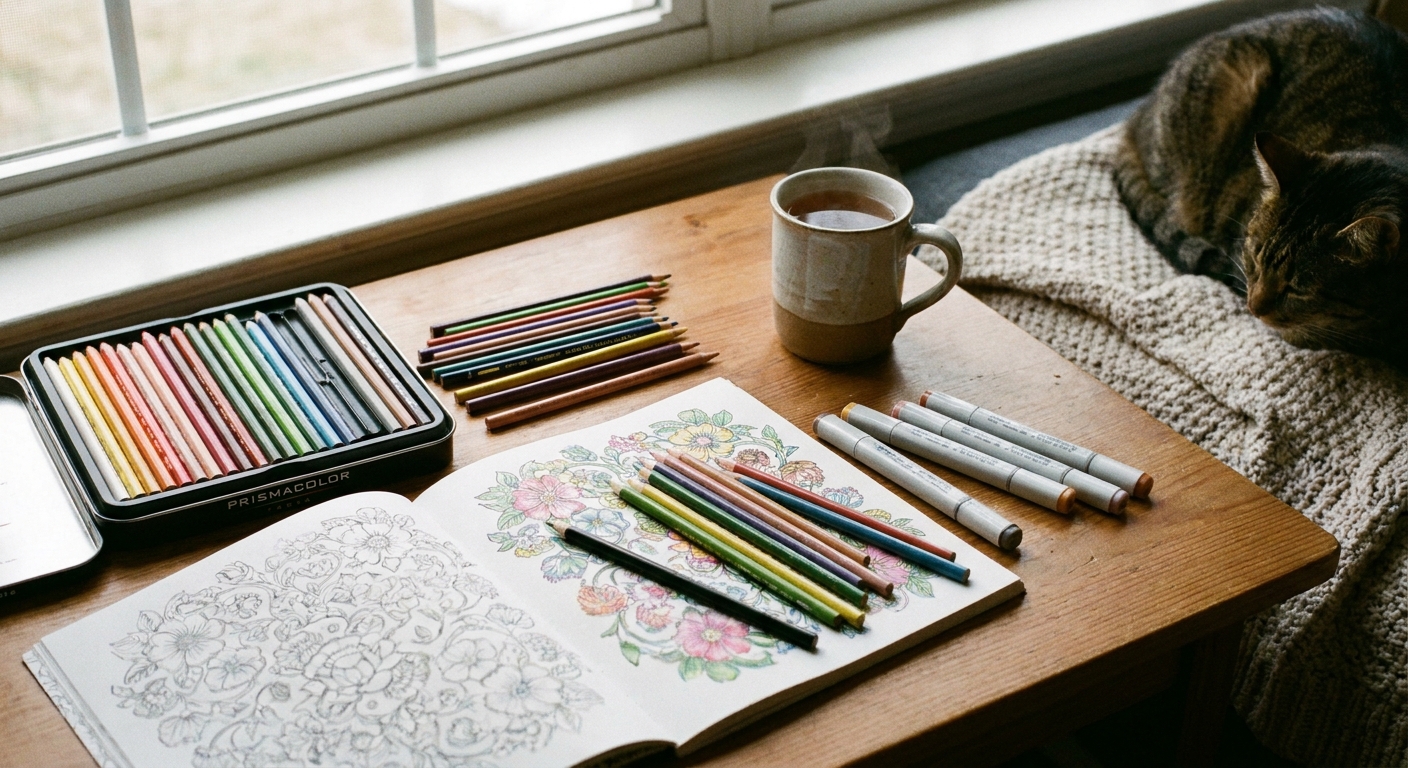
Quick decision guide
If you want the fastest answer, here are a few easy matches. You can always read the deeper details below.
- You love smooth fills and bold color fast: alcohol markers
- You want marker fun with easier cleanup and less bleed: water-based markers
- You enjoy blending slowly, layering, and tiny details: colored pencils
- You mostly print pages at home on regular paper: colored pencils, or water-based markers with a gentle hand
- You want the most forgiving, least intimidating option: colored pencils
For more general coloring basics, you might also like my guide here: Coloring Pages Guide.
How each medium feels
Alcohol markers
Alcohol markers are the ones that feel like magic when you swipe them across the page. The ink is typically dye-based, flows quickly, and tends to blend into itself while it is still wet. That is why you can get those smooth gradients and streak-free fills with the right paper and quick, even strokes.
- Best for: big areas, bold color, smooth shading, “finished fast” satisfaction
- Typical feel: slick, juicy, fast-drying, very vibrant
- Big catch: bleed-through is common, and paper matters a lot
Alcohol markers are usually happiest on marker paper or smooth Bristol. Thicker cardstock can help, but it is not a guarantee. Some cardstocks still feather or let ink show through, especially if you saturate an area. I treat alcohol markers like a special occasion medium, or I use them on pages I know will not be double-sided keepsakes.
Water-based markers
Water-based markers use water-soluble ink. They feel a little more controlled than alcohol markers, and they are usually less smelly and less bleed-prone. They can still bleed, especially on thin paper or if you linger in one spot, but it is generally easier to manage.
- Best for: bright color, casual coloring sessions, kid-friendly setups, mixed media with pencils
- Typical feel: slightly draggy on some paper, can streak if you overwork it
- Big catch: blending is possible, but it is not as effortless as alcohol markers
Water-based markers are wonderful if you like a marker look but want a more relaxed, low-fuss experience. They are also easier to combine with colored pencils, which is one of my favorite “best of both worlds” approaches.
Wax or oil-based colored pencils
Colored pencils are the slow-burn comfort food of coloring. You build color gradually, layer like you are stacking soft blankets, and blend either by burnishing, layering, or using a blender pencil. Wax-based pencils often feel creamier. Oil-based pencils tend to feel a bit firmer and often hold a sharper point longer, depending on the brand.
- Best for: details, controlled shading, delicate transitions, relaxing repetitive strokes
- Typical feel: dry, tactile, quiet, forgiving
- Big catch: filling large areas can take time, and cheap pencils can feel scratchy
If your coloring time is partly about mindfulness, pencils are hard to beat. They invite you to slow down.
What matters most
1) Paper compatibility
This is the make-or-break factor more often than brand.
- Alcohol markers: happiest on marker paper or smooth Bristol. Expect bleed-through on most coloring books and printer paper. Always put a scrap sheet underneath.
- Water-based markers: workable on thicker printer paper and many coloring books if you avoid heavy saturation. Less bleed than alcohol, but paper can pill if you scrub.
- Colored pencils: the most flexible. They work on almost anything, including regular printer paper. Slightly toothier paper helps layering.
If you are printing pages at home, consider using a slightly heavier paper if your printer allows it. Also, if you are using an inkjet printer, let the print fully dry before you go in with markers so you do not smear the lines.
2) Blending style
All three can blend, but the “how” feels very different.
- Alcohol markers: blend while wet. You work quickly, often light-to-dark (or with a colorless blender). The learning curve is real, but the payoff is gorgeous.
- Water-based markers: blend with water, a brush pen, or careful layering. You can get beautiful results, but too much water can buckle paper.
- Colored pencils: blend with layering and pressure. It is slower, but also more controllable, especially for tiny areas.
3) Detail vs. speed
- Fast coverage: alcohol markers, then water-based markers
- Best detail control: colored pencils, especially sharpened
When I am coloring something intricate like hair, feathers, or tiny floral centers, I reach for pencils. When I am tired and want quick color therapy, markers feel like sliding down a playground slide.
4) Cost and longevity
Budget matters, and it should. Coloring is supposed to feel welcoming.
- Alcohol markers: typically the most expensive. They can be refillable depending on the brand, but they still add up. They also use ink faster when you are filling large areas.
- Water-based markers: often mid-range and widely available. They can dry out if left uncapped, but replacements are usually affordable.
- Colored pencils: the biggest price range. You can start cheap, then upgrade later. Even a modest set can last a long time if you rotate colors and sharpen gently.
5) Mess level and setup
- Lowest mess: colored pencils
- Moderate mess: water-based markers (watch for smudges and damp paper)
- Highest “protect the table” factor: alcohol markers (bleed-through happens)
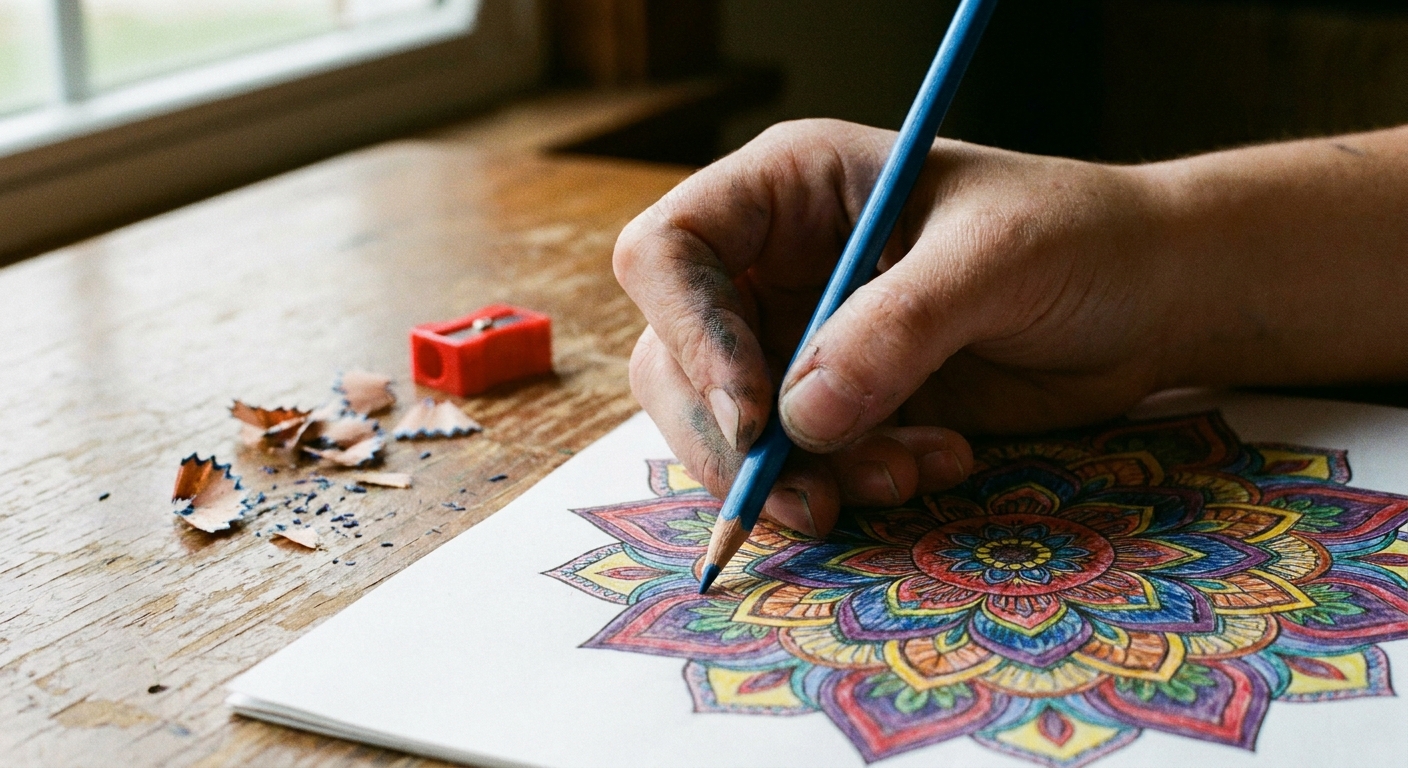
Alcohol markers: best times to use them
Choose alcohol markers if you want that smooth, saturated look and you do not mind planning around paper.
Best uses
- Large backgrounds and bold graphic shapes
- Simple pages where you want “wow” color fast
- Projects you will cut out, frame, or glue onto cardstock
Tips to keep it fun
- Use a backing sheet. Always protect the page underneath.
- Work in small sections. Keep a wet edge for smoother fills.
- Outline carefully. A slightly darker marker on edges can hide tiny slips, but test it on a corner first so it does not look harsher than you want.
- Cap quickly and ventilate. Alcohol markers can be smelly. I like a cracked window, and I cap them the second I pause.
If bleed-through makes you sad, consider saving alcohol markers for single-sided prints or for pages you plan to turn into crafts.
Water-based markers: bright and approachable
Water-based markers are often the easiest marker entry point, especially if you color with kids nearby or you like a more casual session.
Best uses
- Everyday coloring pages on decent paper
- Quick pops of color you can refine with pencils later
- Kid-friendly art time where you want easy cleanup
Tips for smoother results
- Use lighter pressure. Let the ink do the work.
- Do not over-scrub. Too many passes can rough up paper.
- Try a pencil finish. Add shadows and texture with colored pencils after the marker dries.
Tip style matters here. Brush tips are lovely for larger areas. Fine tips are easier for tiny spaces. If you keep getting streaks, you might simply be using a tip that is fighting the size of the shape you are filling.
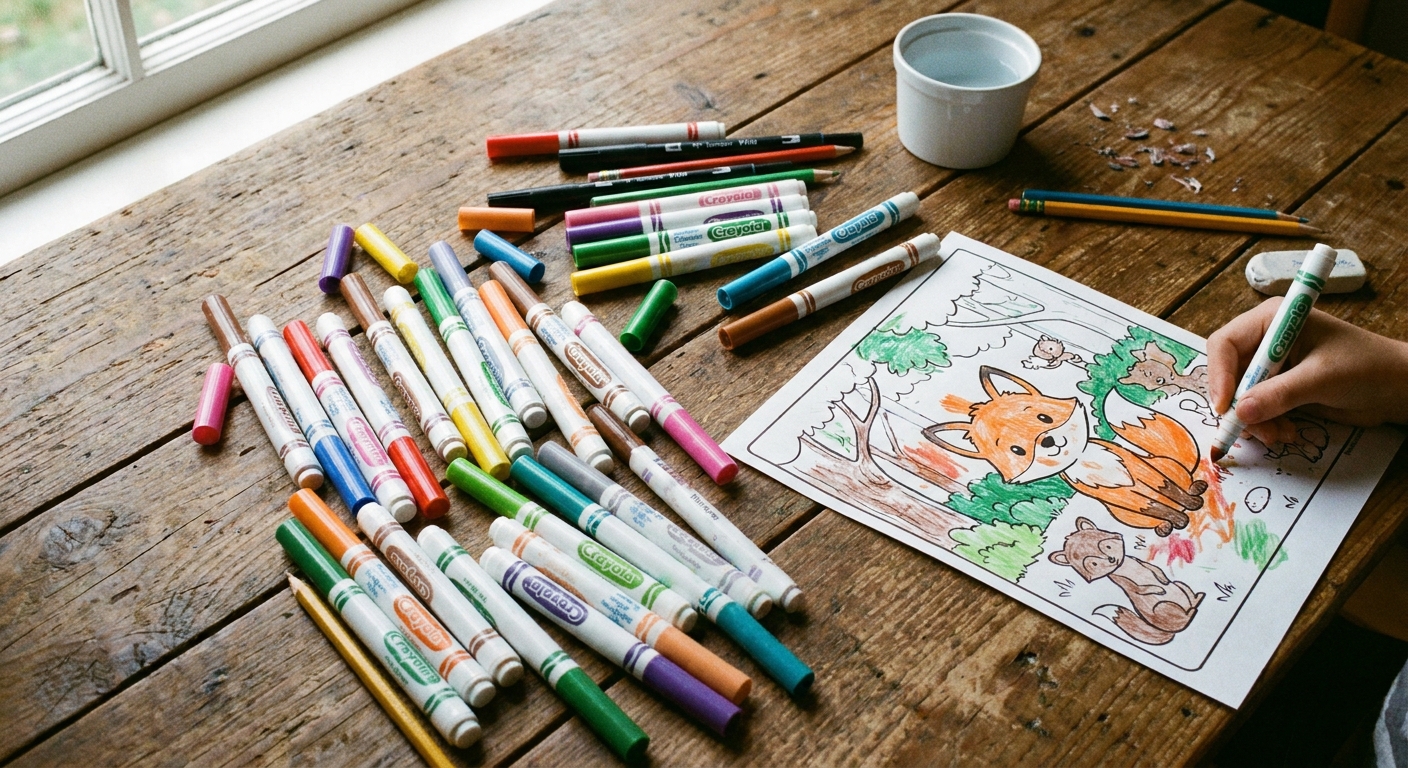
Colored pencils: calm and reliable
If you like to settle in, take your time, and feel the page under your hand, colored pencils will probably feel like home.
Best uses
- Intricate pages with tiny details
- Soft shading and gradual gradients
- Coloring books and printer paper where you want minimal bleed risk
Tips for richer pencil color
- Layer lightly. Several gentle layers look smoother than one heavy layer.
- Change direction. Crosshatching and small circles help reduce streaks.
- Keep a sharp point. Details instantly look cleaner.
- Burnish at the end. Use heavier pressure or a light pencil to smooth the final layer.
One of my favorite low-pressure habits is to pick just three pencil values for a section: light, mid, and dark. It keeps decisions simple and makes shading feel doable.
Mixing mediums
You do not have to be loyal to one tool. Some of the prettiest, least stressful coloring happens when you let each medium do what it is best at.
Easy combinations
- Water-based markers + colored pencils: lay down flat color fast, then add pencil shadows, texture, and tiny details.
- Alcohol markers + colored pencils: use markers for base layers, then use pencils on top for depth. Make sure the marker is fully dry first.
- Colored pencils first, marker second: generally trickier because marker can resist waxy layers and streak. If you try it, keep pencil pressure very light.
If you enjoy turning finished pages into small gifts, you might like: Turn a Coloring Page Into a Folded Card.
Match your style
If you color to relax
Colored pencils are the most meditative for many people. The slower pace is the point.
If you want to finish fast
Markers, especially alcohol markers, deliver quick satisfaction and bold payoff.
If you love tiny details
Colored pencils, or fine-tip water-based markers paired with pencils for shading.
If you hate mistakes
Colored pencils are the most forgiving because you can lighten, layer over, and adjust gradually. Markers commit quickly, which can feel exciting or stressful depending on the day.
Common problems and fixes
My markers bleed through everything
- Use a blotter sheet underneath every time.
- Switch to water-based markers or pencils for thin paper.
- Print on heavier paper when possible.
My marker fills look streaky
- Work in smaller areas and keep the ink edge wet.
- Use consistent strokes in one direction, then stop before the paper gets overworked.
- Try a different tip size for the space, then add pencil shading on top once dry.
My pencils look pale and scratchy
- Layer lightly instead of pressing hard right away.
- Try a slightly softer pencil set when you can.
- Use small circular strokes to fill tooth more evenly.
I cannot decide and I keep buying supplies
I say this with total love: pick one page and commit to one medium for that page only. Your hands will tell you the truth faster than your brain will. The best choice is the one that makes you want to come back tomorrow.
My simple recommendation
If you are starting from scratch, I think colored pencils are the easiest place to begin because they work on almost any page and feel forgiving. If you already know you crave bold, smooth color and you are willing to baby the paper a bit, alcohol markers can be an absolute treat. Water-based markers sit happily in the middle and play well with pencils, which makes them a wonderful everyday option.
Most importantly, your medium is not a test. It is just a tool for a quiet, colorful moment at the table.
If you want to learn more about how I approach coloring without overthinking it, visit my author page or browse our guides starting here: Coloring Pages Guide.