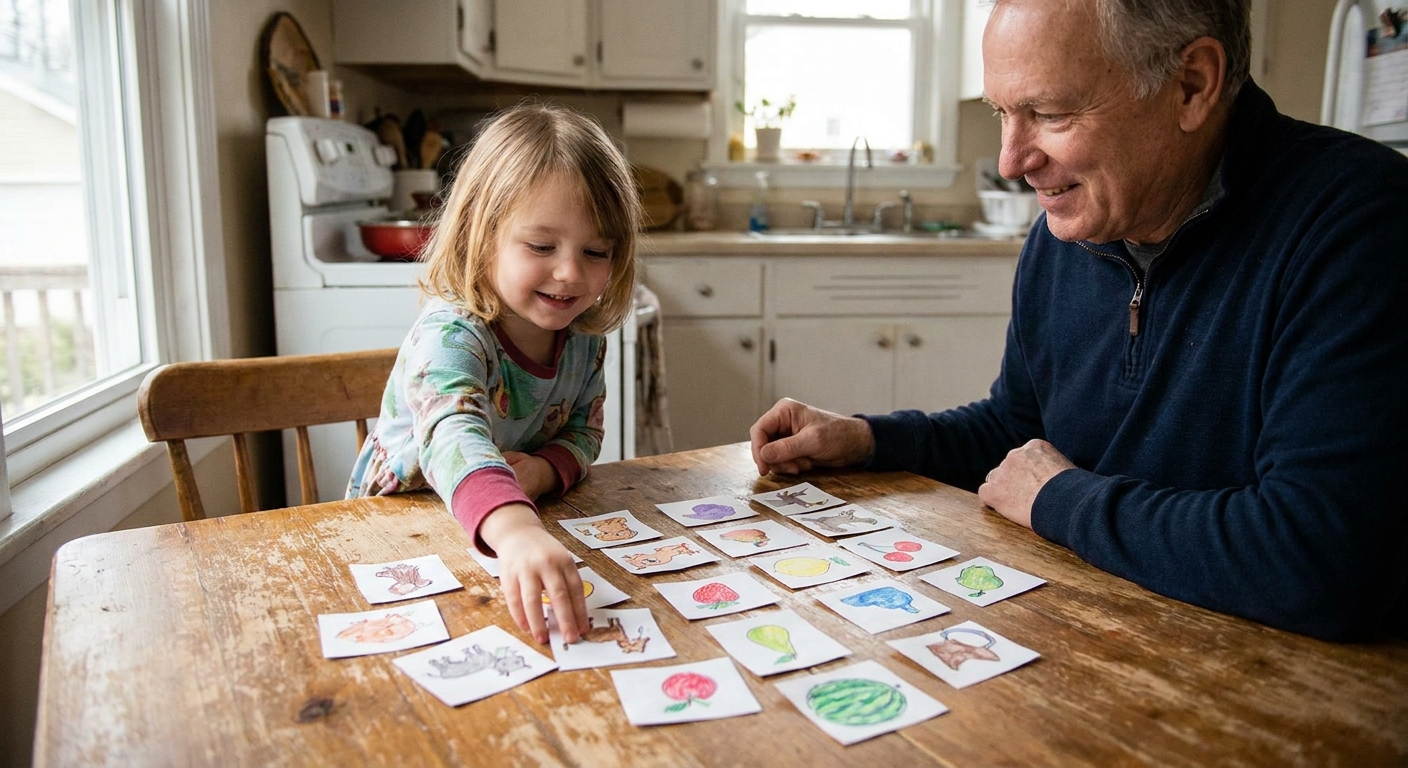

When I was growing up, our dining table was never really a dining table. It was a landing pad for sketchpads, crayons, and half-finished doodles. Somewhere between passing the peas and hunting for the good eraser, I learned a sneaky truth: kids tell stories constantly. Sometimes they just need a picture to hand them the first sentence.
Coloring pages are perfect for this because they lower the pressure. A child does not have to “invent” everything from scratch. The page offers a character, a place, an object, or an emotion, and suddenly storytelling feels like play.
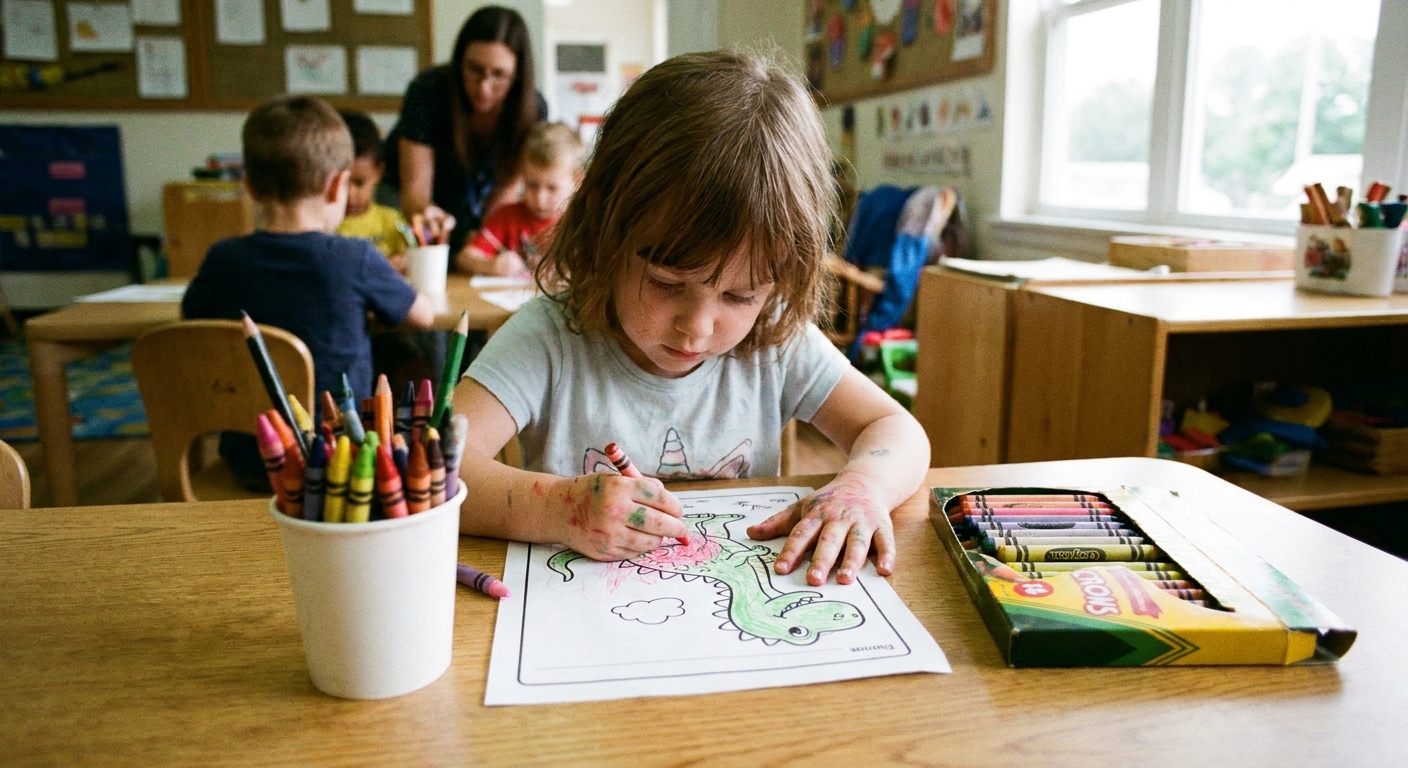
Below are seven simple, classroom-ready and kitchen-table-ready ways to use sequential or thematic coloring pages as prompts to build basic storytelling skills like beginning-middle-end, cause and effect, character motivation, and clear details.
Before you start: pick pages that invite a story
You can use almost any coloring page, but the easiest prompts usually include at least one of these:
- A character doing something (running, carrying, hiding, building)
- A setting (park, ocean, space, kitchen, spooky forest)
- A problem hint (storm clouds, missing item, silly mix-up, surprised face)
- Props (map, backpack, wand, birthday cake, robot parts)
If you are building a sequence, choose 3 to 6 pages that feel connected by theme. They do not need to match perfectly. Kids are amazing at stitching ideas together when you let them.
Quick age tweak: Preschoolers often do best with one page and an oral story. Early elementary kids usually love three pages. Older kids can add a title and one sentence about the main problem before they start coloring.
If you want a refresher on choosing and printing pages for different ages, my overview in Guide to Coloring Pages can help you match complexity to attention span.
1) Three-panel story
This is my favorite starter because it quietly teaches story structure without feeling like a lesson.
How to do it
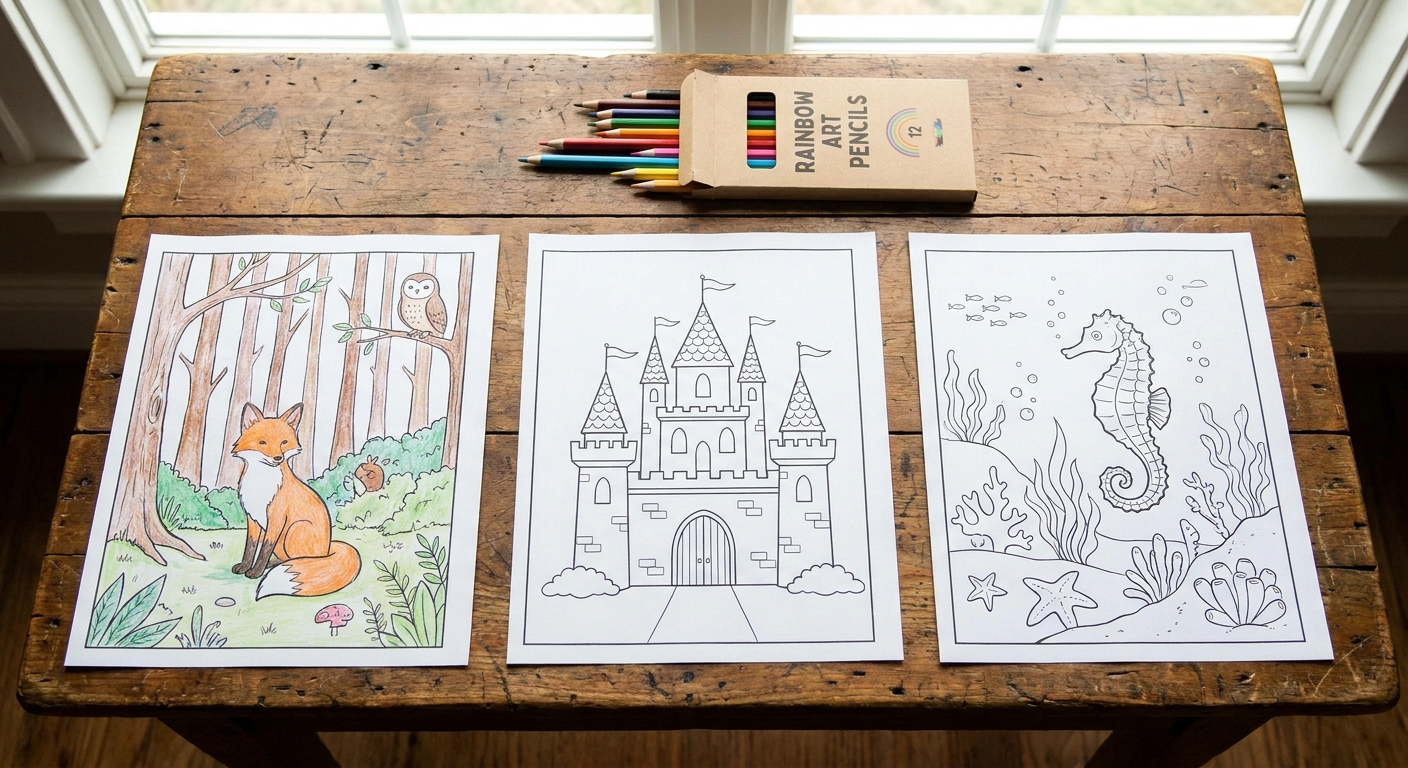
- Pick three related coloring pages, or even one page cut into three sections if needed. If you are cutting, do it for younger kids so it stays safe and frustration-free.
- Label them out loud as Beginning, Middle, and End. No need to write labels on the paper.
- Have your child color each page, then tell you what happens in each part.
Helpful prompts
- Beginning: “Who is this? Where are they?”
- Middle: “What went wrong or what changed?”
- End: “How did it turn out?”
Low-pressure option: You can scribe their words on a sticky note and place it under each page. They still wrote a story without getting stuck on spelling.
2) Character builder
Strong stories come from characters who want something. Coloring pages give kids a character instantly, which lets you focus on the fun part: personality.
How to do it
- Choose a page with a clear character (animal, kid, fairy, astronaut, dinosaur).
- While they color, ask three questions and keep the answers simple.
The three questions
- Name: “What is their name?”
- Want: “What do they want more than anything today?”
- Worry: “What are they a little bit worried about?”
Those three details create instant story fuel. A bunny named Junie who wants to win a pie contest but worries her whiskers will get frosting on them is already halfway to a plot.
Teacher tip: If you are in a group setting, let kids share just one line each: “My character is ___ and they want ___.” Quick, structured, and everyone gets a turn.
3) Setting switch
This one builds flexibility and helps kids understand how setting affects what can happen.
How to do it
- Pick one character page and two different setting pages (for example: beach and space, or farm and city).
- Have the child color the character once, then place the character into each setting by telling two versions of the story.
Prompts that work well
- “What changes because we are at the beach instead of space?”
- “What does the character need here?”
- “What would be easy in one place but hard in the other?”
Simple extension: Ask for one sensory detail in each setting. “What do they smell?” or “What sound do they hear?” Those tiny details make stories feel real quickly.
4) The because game
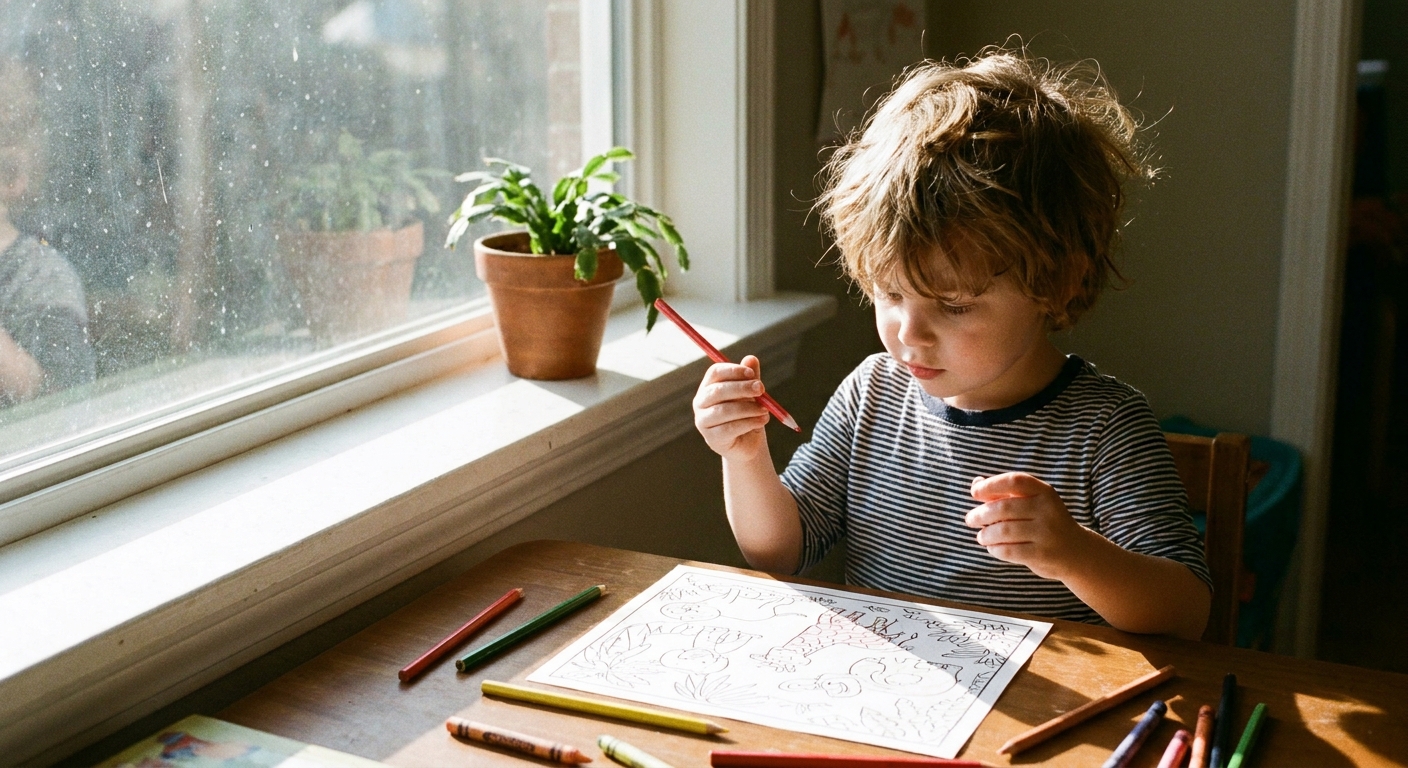
A lot of early storytelling sounds like a list: “And then this happened. And then this happened.” The word because is a magic bridge that helps kids practice cause and effect.
How to do it
- Choose 2 to 4 pages that could be connected in sequence.
- For each page, have the child say one sentence that includes because.
Examples you can model
- “She grabbed the umbrella because the clouds got dark.”
- “The dragon hid the cupcakes because it was planning a surprise.”
Supportive twist: If because is tricky, you can offer two choices. “Did he run because he was excited or because he was scared?” Choices keep the brain moving without feeling like a test.
5) Dialogue bubbles
Kids love making characters talk, and dialogue is a powerful storytelling skill. It reveals emotion, relationships, and the moment-to-moment action.
How to do it
- Choose a page with two characters, or add a friend to the story verbally (a pet, a robot, a sibling).
- Ask the child to create two lines of dialogue: one for each character.
- Encourage them to use feeling words, not just facts.
Prompts
- “What does one character say that makes the other react?”
- “How do we know they are excited, annoyed, or nervous?”
- “What would they say if they were trying to be kind?”
No writing required: You can simply take turns speaking as the characters. I do this at the table all the time and it turns into the silliest little play.
6) Mystery object
Suspense does not have to be scary. For kids, suspense can be as simple as “What is in the box?” or “Why is the cat wearing a hat?”
How to do it
- Pick a coloring page with an object that could hide something (box, backpack, closet, treasure chest, egg, wrapped gift).
- Before coloring is finished, pause and ask for three predictions.
Prediction prompts
- “What do you think it is?”
- “Why is it there?”
- “What could go wrong when they open it?”
Then after they finish coloring, ask them to pick their favorite prediction and tell the story as if that prediction is true.
7) Alternate endings
Alternate endings teach kids that stories are built from choices. It also helps perfectionist kiddos relax because there is no single right ending.
How to do it
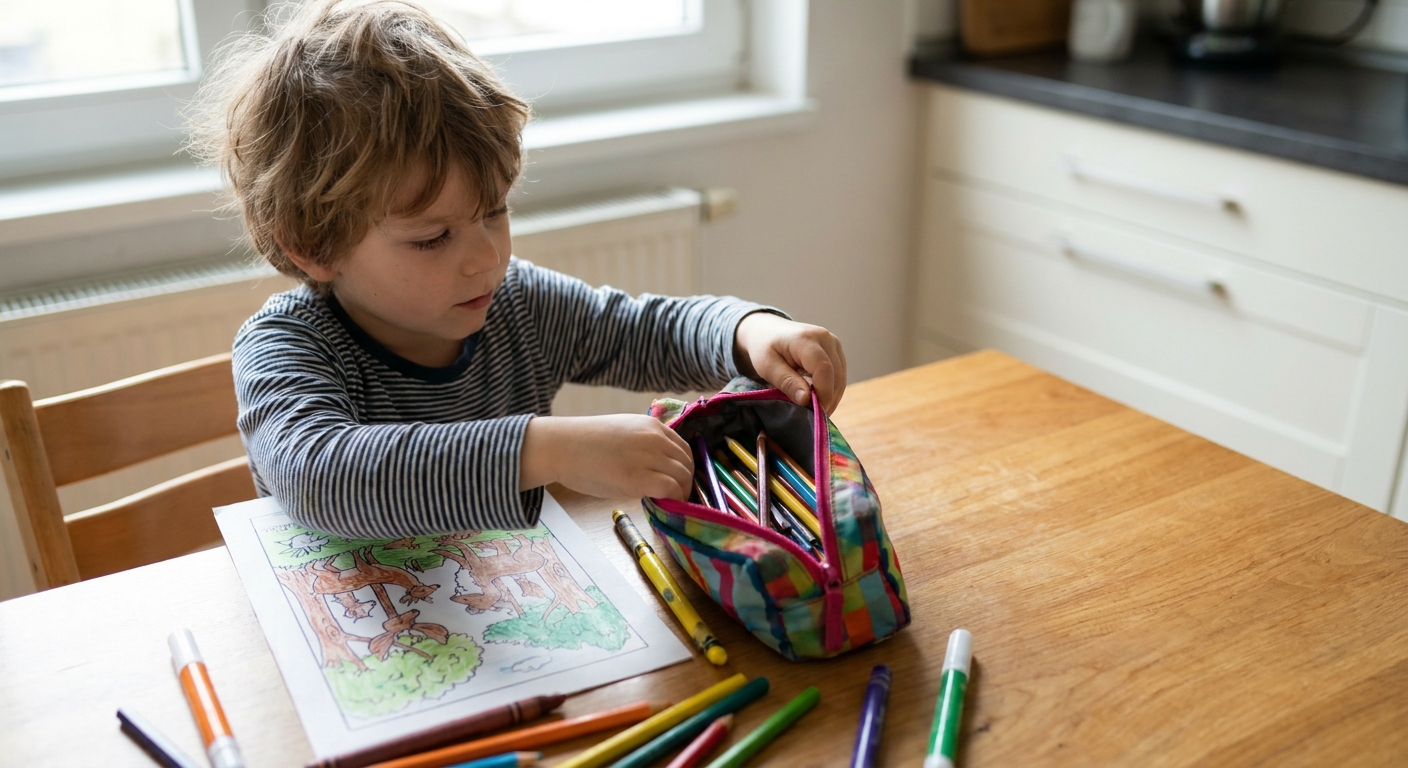
- Use a set of pages that clearly suggests a problem (lost item, stormy day, spilled paint, sad face).
- After the child tells the ending, ask for two more endings that change one detail.
Ways to vary the ending
- Change the helper: “What if a friend helped instead?”
- Change the setting: “What if this happened at night?”
- Change the character’s choice: “What if they asked for help right away?”
Classroom-friendly version: Put kids in pairs. One tells the original ending, the other tells an alternate ending. Quick sharing, lots of laughter.
A simple weekly routine
If you want this to feel consistent but not complicated, here is a low-fuss rhythm I love:
- Pick: 3 related pages for the week.
- Color: 10 to 20 minutes per session.
- Tell: One minute of storytelling per page.
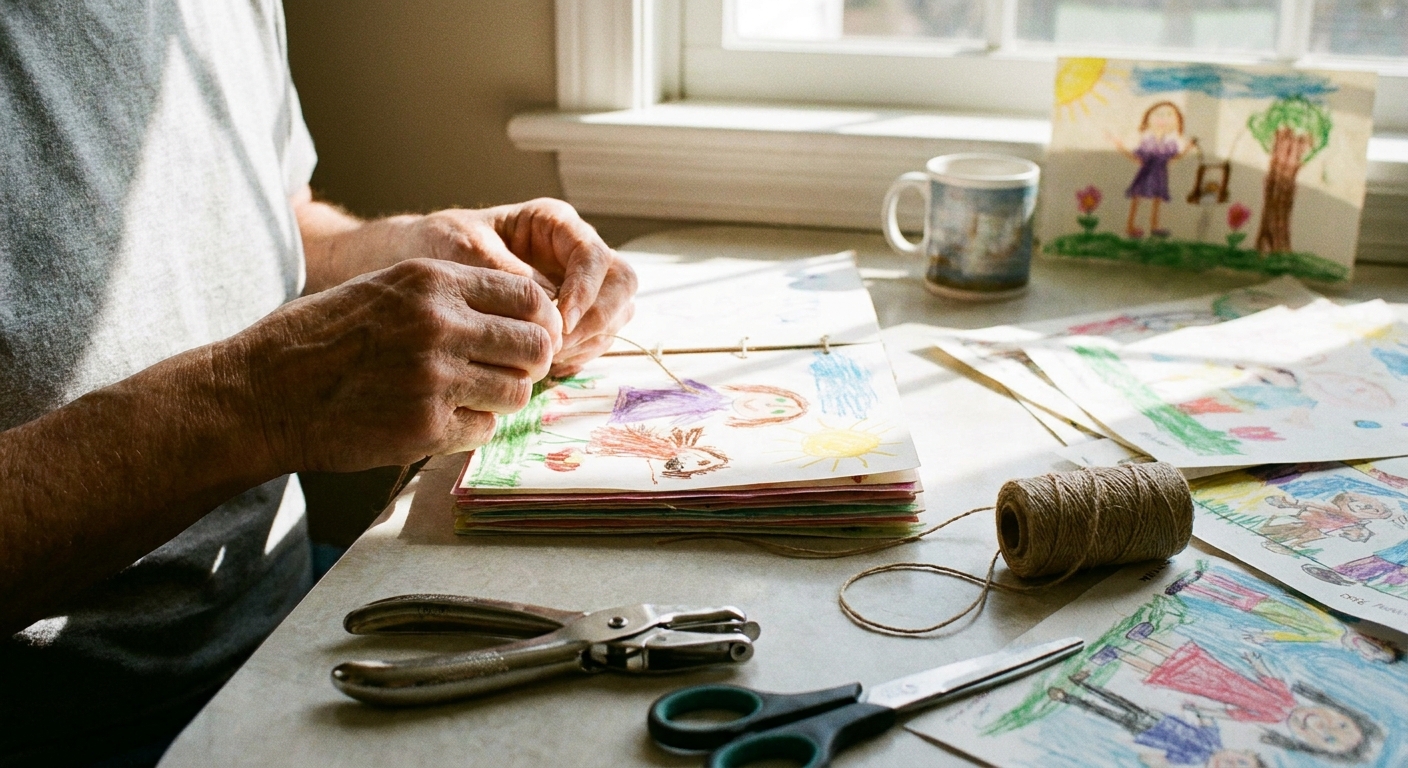
- Save: Staple the pages into a story packet and date it.
By the end of a month, kids can often flip through their own growth, and that kind of confidence can carry into reading and writing in a really lovely way.
Easy storage idea: If stapling gets messy, slide the packets into a plain folder or a simple three-ring binder so you can keep them together (and pull them out for grandparents, teachers, or just a proud re-read).
Common hurdles
“My child only describes colors.”
That is still language practice. Add one story question after the color comment: “You made the sky purple. What does that tell us about the day?”
“They get stuck and say ‘I don’t know.’”
Offer choices. “Is the character happy or worried?” Once they choose, ask “Why?”
“They rush the coloring.”
Let them. Storytelling can happen even with quick coloring. If you want to slow it down, suggest one detail to add: patterns on clothing, a background color, or a shadow.
“A group gets noisy.”
Make it a turn-taking game. One sentence per child, going around the table. The story becomes a shared creation instead of a competition.
Keep it playful
The goal is not a perfect plot. The goal is helping kids practice the building blocks: a character, a place, a problem, a choice, and an ending. Coloring pages do something wonderful here. They remove the intimidation of the blank page and replace it with an invitation.
If you want another easy way to turn finished coloring into a story keepsake, you can fold one into a little cover and make it feel like a real book or card. I walk through the simple steps in Turn a Coloring Page into a Folded Card.
And if you ever hit that familiar “I don’t know what to do with this page” feeling, my cozy reset is here: Coloring Your Way Out of Creative Block. It works for grown-ups and kids.